
These healthy fats are found in high concentrations in certain types of fish, such as salmon, mackerel, sardines, and tuna. Regular consumption of these fish has been linked to a stronger immune system and better overall health. In conclusion, acute HIIT exerts a rapid immunoregulatory effect by increasing Tregs and modulating T cell subsets. However, the effects of HIIT may vary across different populations, particularly in terms of immune aging, and long-term HIIT may need to be tailored to individual conditions. The impact of various exercise workloads on immune cells in both human populations and mice models.
Extended data
Overall, the decrease in NK cell activity after intense exercise is a key factor in temporary immune suppression. Overall, moderate-intensity exercise supports T-cell function and sustains Th1/Th2 equilibrium, promoting a balanced immune response that enhances both cell-mediated immunity (Th1) and humoral immunity (Th2). This shift is essential for maintaining immune function, enhancing immune defense, and promoting healthy aging by preventing excessive inflammatory responses (68, 69). Acute and chronic moderate-intensity exercise training is generally regarded as an immune system adjuvant that has multiple beneficial effects in stimulating both innate and adaptive immunity and lowering the risk for infectious diseases (17).
Losing Weight for Immune Health
Studies show that acute HIIT increases the number of CD4+ and CD8+ T cells in peripheral blood and raises the CD4/CD8 ratio, but this increase typically returns to near pre-exercise levels within 3 hours post-exercise (99). Additionally, acute HIIT rapidly boosts the number of circulating regulatory T cells (Tregs), exerting a short-term immunoregulatory effect. Krüger et al. (116) found that acute HIIT significantly increased Treg numbers in peripheral blood immediately after exercise and up to 3 hours post-exercise, indicating that HIIT can quickly enhance immune regulation through Treg modulation (116). However, acute HIIT may also induce redox imbalance in T cells, leading to reduced T cell proliferation in response to superantigen (SEB) stimulation, although this does not affect early activation or apoptosis (117). Conceptualized the manuscript and led all aspects of the work, including supervision, visualization, investigation, methodology and writing of the original draft, and conducted the systematic reviews for the mental health and cancer sections of the manuscript. Led the inequalities analysis, including supervision, data curation, formal analysis, investigation, methodology, visualization and writing sections for the original draft.
Just 15 minutes may help with immunity
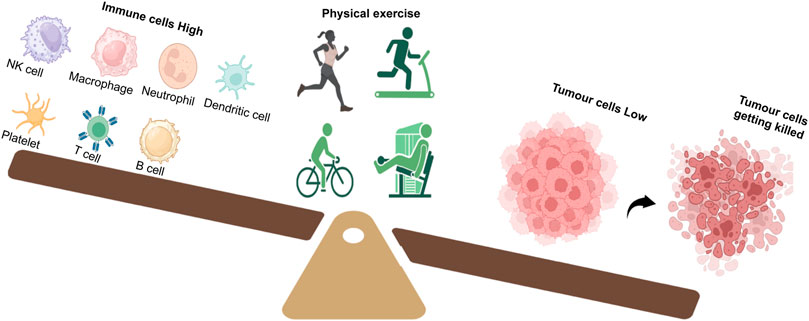
The link between physical activity and cancer prevention and control has long been established. Sign up to get tips for living a healthy lifestyle, with ways to lessen digestion problems…keep inflammation under control…learn simple exercises to improve your balance…understand your options for cataract treatment…all delivered to your email box FREE. Although there is some research arguing the link between heavy exertion and transient immune dysfunction, the overall consensus is that function of the immune system reflects the magnitude of physiological stress experienced by the exerciser. However, many people go wrong because they think the more they exercise, the stronger their immune system will be—and it’s actually the opposite. It’s a complex and highly intricate network of cells and molecules designed to maintain health and prevent the infiltration of pathogenic bacteria that cause illness and infection. Whether you are or aren’t aware of the relationship between exercise and immune function, we’re breaking it down for you.
When you view the body as a whole, you’ll find that there are 4 important areas to focus on if you want to keep your immune system working as efficiently as possible. And you might be surprised to learn that boosting your immune system is surprisingly simple. Right now, there’s a lot of misinformation out there about how to protect yourself against viruses and keep your immune system functioning at peak performance. It’s strongly suggested to follow the CDC’s recommendations on staying safe during this time, but be aware of other resources toting unusual advice, especially if they’re also marketing a product like their own supplements. Learn about Active People, Healthy NationSM, CDC’s national initiative to help people be more physically active. Taking more steps a day also helps lower the risk of premature death from all causes.

This biphasic response underscores the need to consider temporal dynamics when evaluating immune adaptations to exercise. In addition, acute aerobic exercise induces robust macrophage infiltration and chemokine (e.g., CXCL12) release in skeletal muscle, especially in individuals with type 2 diabetes. The altered immune profile highlights the role of exerkines and cross-talk between myocytes and immune cells in tissue adaptation (43). The top part of the model is informed by the Dahlgren−Whitehead Social Determinants of Health model50 and by the findings of our global inequalities/intersectionality analysis.
The Role of Nutrition in the Immune System
In this regard, the units of analysis were the countries, and we estimate the median of physical activity prevalence for each inequality dimension using quantile regression. Confidence intervals were estimated using the bootstrap method with 100 resampling iterations. Socioeconomic inequality was analyzed using the SII, which is an absolute and complex measure expressed in percentage points, indicated to be employed when the dimension of inequality is an ordinal variable74. In brief, the SII was initially developed based on linear regression, but, currently, it can be calculated using logistic regression, which is more suitable for coverage/prevalence indicators74.
It can be regarded as the first line of defence of the immune system against external pathogens [76]. In addition, SIgA plays a variety of other roles and in particular, it acts as an anti-inflammatory, down-regulating inflammation processes [77]. The higher concentration of SIgA shown by our meta-analysis indicates that regular physical activity also strengthens the mucosal barrier to pathogens and the body’s first line of defence.
The American Dental Association has released a simple patient guide outlining what type of appointments should be postponed. These appointments include your regular bi-annual exams and cleanings, cosmetic procedures, and treatment for non-painful conditions. This means if you were due to have a cavity filled but you aren’t experiencing pain, it’s best to reschedule. Emotional eating is very normal, and right now, many people are finding themselves eating away their worries. There’s nothing wrong with finding comfort in your favorite ice cream or a bag of chips, but be aware of how much snacking and indulging you and your family might be doing because sugar does lower your immune system response.
Exercise and the Regulation of Immune Functions
- The development of Coronavirus Disease 2019 (COVID-19) is dependent on the interaction between SARS-CoV-2 and the host’s immune system, the immune response being influenced by genetics (HLA genes), age, sex, nutritional status and status physical [9].
- Your diet is the foundation of your overall health, and it plays a critical role in maintaining and strengthening your immune system.
- Vitamin D is a secosteroid hormone known to interact with more than 200 genes via nuclear receptors expressed on various tissues of the body (Nurminen et al., 2019), including the immune cells.
- These compounds have powerful antioxidant and anti-inflammatory properties that can enhance your immune system.
- The effects of strenuous exercise on cytokines mirror the acute immune response that is triggered by exercise.
- However, chronic strenuous exercise may intensify inflammation, as TNF-α levels rise with repeated bouts of intense activity (65, 189).
Once the normal level is achieved, there may be no further benefits from further vitamin D consumption. Only the beneficial effect of vitamin D supplementation and deficiency surfaced the respective vitamin as an index of compromised immune function. Indeed vitamin D https://www.healthcarebusinesstoday.com/10-best-muscle-building-apps-in-2026/ intervention based on more research could evaluate the actual impact of vitamin D deficiency or overdose.
4 Heterogeneity, Publication Bias, Sensitivity Analysis and Influence of Intervention Characteristics
A 2020 study in Frontiers in Immunology suggests that moderate-intensity exercise—around 150 minutes per week—is ideal for immune support. This could mean 30 minutes a day, five times a week, of activities like walking, swimming, or cycling. The key is consistency over intensity; moderate, regular exercise is more beneficial than sporadic, high-intensity workouts, which may actually lead to temporary immune suppression. While the evidence base was overall of good quality with most studies being of moderate to low risk of bias, future research should seek to improve certain points. For observational studies, better reporting and treatment of confounding factors would improve the situation. In addition, the main limitation within observational studies was that physical activity was self-reported rather than objectively measured.
How Physical Activity Can Boost Your Immune System
Additional Factors & Final Thoughts 🌈 ☀️ Stress Management Chronic stress can severely impact your immunity, making mental well-being a crucial factor. This could be as simple as taking breaks, engaging in hobbies you love, or practicing mindfulness.Moderation in Lifestyle ChoicesRegular alcohol consumption and smoking have well-documented negative impacts on immune function. If these are part of your routine, reducing or eliminating them can make a huge difference.Consistency Over PerfectionThere’s no ‘magic bullet’—it’s the cumulative effect of small, consistent habits that makes the difference. It improves sleep quality and quantity, which is imperative for recovery and fighting off illness.
Innate immunity vs. acquired immunity
In addition, old trained people exhibit a lower extent of inflammatory markers compared to inactive people. This could be at least partially due to the action of muscle mass, which have immunoprotective and anti-inflammatory effects by releasing protective factors called “myokines” (Pedersen and Febbraio, 2012). Some have advocated the importance of physical activity for resilience against COVID-19 [6, 8,9,10,11]. A number of narrative reviews have debated the effect of physical activity on human immunity [5, 12] but the majority of this literature is devoted to the acute effect of exercises and focuses on athletes. Some reviews and meta-analysis have evaluated the impact of exercise on the risk of self-reported upper respiratory tract infection, but these were inconclusive due to a low level of evidence and very few available studies [13, 14]. Regular moderate-intensity exercise also increases salivary secretory IgA (SIgA) in older adults (72, 73), bolstering mucosal immunity as a first line of defense.
Common tests that check the health of your immune system
Different inequality patterns were observed for active transport and active labor, with large variations in the degree of inequality between wealthy men and poor women across country income categories (Fig. 3). For instance, in high-income and upper middle-income countries, more women of low socioeconomic status meet guidelines through active transport than wealthy men, but smaller differences are observed in lower middle-income and low-income countries. Likewise, in all country income groups except high-income countries (that is, in LMICs), the prevalence of meeting guidelines through active labor is higher in women of low socioeconomic status than in men of high socioeconomic status. Complementarily, the necessity-based versus choice-based physical activity framework posits that, for many worldwide, a major driver of physical activity is economic necessity rather than free, non-economically coercive healthy choices15. Thus, despite high levels of overall physical activity, globally, many people remain ‘physical activity insecure’. Thus, the necessity-based versus choice-based physical activity framework calls into question the ethics of assuming all physical activity as being supportive of optimal physical, mental and social wellbeing.
Attempting to boost the cells of your immune system is especially complicated because there are so many different kinds of cells in the immune system that respond to so many different microbes in so many ways. The extra cells remove themselves through a natural process of cell death called apoptosis — some before they see any action, some after the battle is won. No one knows how many cells or what the best mix of cells the immune system needs to function at its optimum level. We’re covering the basics of what you need to know about exercise—why it’s important for overall health, how it’s connected to immune function, and the best type of exercise food boosting the immune system. More vigorous aerobic exercise – such as running or cycling – is also beneficial for immune function. However, if your ability to exercise is limited by health conditions or disability, moving more and doing some type of exercise is better than nothing.
